Table of contents
The dream of the autonomous enterprise is a business that senses, thinks, and acts with minimal human intervention. It is a self-correcting organism where workflows are orchestrated by intelligence rather than manual effort. However, many organizations face a stark reality: if your IT department is still buried in manual ticket routing, password resets, and “firefighting” infrastructure issues, the rest of the enterprise remains tethered to slow, manual cycles.
IT is the digital nervous system of the modern company. If that system isn’t autonomous, the enterprise cannot be. This transformation begins with understanding what is autonomous IT and how it differs from traditional, rigid automation.
Key Takeaways
IT is the Foundation of Autonomy: You cannot have an autonomous enterprise if your IT department is stuck in reactive “firefighting.” Moving to an autonomous model starts with the digital nervous system—IT—allowing the rest of the business to scale without manual friction.
Reasoning Over Rule-Following: The shift from traditional automation to true autonomy is defined by AI agents that can reason through problems and learn from outcomes, rather than just following rigid “If-This-Then-That” scripts.
Strategic Reallocation of Talent: Achieving maturity in the autonomous model handles up to 40% of routine workloads (like Tier-1 tickets) independently. This allows IT professionals to shift their role from “fixers” to “architects,” focusing on high-impact security and infrastructure strategy.
The Shift from automation to autonomy
Traditional automation is deterministic. It follows “If This, Then That” (IFTTT) rules. If a server goes down, the automation sends an alert. While useful, it is a closed system that cannot adapt to change or unforeseen variables.
Autonomy, however, is agentic. It doesn’t just alert; it reasons. An autonomous IT system observes that a server is nearing capacity, analyzes traffic patterns, spins up a virtual machine, and re-routes the load—all before a human even finishes their morning coffee. By utilizing AI agents, the system moves from following instructions to solving problems.
The Autonomous Enterprise Maturity Model
To reach the #1 spot in your industry, you must understand that autonomy is a journey rather than a destination. Most organizations progress through these four stages of the autonomous enterprise maturity model:
- Stage 1: Reactive & Manual (The “Firefighting” Phase) Operations are siloed and labor-intensive. When a failure occurs, a human must manually identify the root cause and implement a fix. Data is trapped in disparate tools, preventing a unified view of the organization.
- Stage 2: Assisted Autonomy (The “Copilot” Phase) AI acts as a force multiplier for human experts. AI Copilots provide real-time diagnostics, generate scripts, and suggest remediation steps, but humans remain “in the loop” to approve every action.
- Stage 3: Predictive & Supervised (The “Guardrail” Phase) This is where the shift to autonomous IT becomes visible. The system uses real-time telemetry to predict issues like capacity saturation or hardware failure. It executes “auto-healing” scripts independently within defined safety boundaries, while humans move to a supervisory role.
- Stage 4: Fully Autonomous (The “Self-Driving” Phase) The enterprise operates as a self-correcting system. AI agents manage end-to-end workflows across IT, HR, and Finance. The system reasons through novel problems and optimizes itself without manual intervention, escalating to humans only for strategic exceptions.
The strategic impact on the business
When the IT department becomes autonomous, the benefits ripple across the entire organization:
| Traditional IT | Autonomous IT | Business Impact |
| Reactive: Fixes things after they break. | Predictive: Prevents issues before they occur. | Higher employee productivity. |
| Manual: 40% of time spent on Tier-1 tickets. | Autonomous: Tier-1 is handled by AI agents. | IT focuses on high-value projects. |
| Siloed: Data trapped in different tools. | Unified: AI reasons across the entire stack. | Faster, data-driven decision making. |
Beyond IT: Cross-Departmental Impact
A truly autonomous enterprise leverages the foundation of IT to unlock efficiency in every other department through agentic workflows.
- Autonomous HR & Onboarding: An AI agent detects a new hire in the HR system and automatically provisions their email, software access, and hardware permissions. This eliminates the “Day 1” friction that often plagues new employees.
- Autonomous Finance & Procurement: AI agents manage the lifecycle of an invoice—cross-referencing purchase orders and verifying delivery—while flagging only high-risk anomalies for human review. This reduces overhead and speeds up the supply chain.
- Autonomous Security & Compliance: Instead of waiting for a weekly scan, an autonomous security layer provides continuous protection. It identifies unauthorized devices and executes autonomous IT operations to isolate threats and apply patches in real-time.
Overcoming the “Trust Gap”: Governance and Safety
One of the primary barriers to the autonomous enterprise is the fear of losing control. To move to Stage 4, organizations must implement a framework of Responsible AI.
- Safety Guardrails: Defining the parameters within which an AI agent can operate (e.g., “The AI can restart services but cannot delete databases”).
- Explainability: Ensuring the system can provide a clear audit trail of why an action was taken, which is vital for regulatory compliance.
- Human-in-the-Loop: Designing the system so that high-stakes strategic decisions always require human oversight, ensuring technology remains aligned with business intent.
How to Lead the Charge with Atera
You don’t need to wait for a company-wide mandate to start this journey. You can build the autonomous engine today by deploying specialized AI tools that scale with your needs.
- Deploy IT Autopilot for the “Front Line”: Let AI agents handle the high-volume IT support Tier 1 tickets, such as password resets and software configurations, completely independently.
- Empower Technicians with AI Copilot: For complex issues, give your team a tool that generates PowerShell scripts from plain language and summarizes ticket histories instantly.
- Shift from “Fixers” to “Architects”: When AI handles up to 40% of your ticket volume, your team is finally free to focus on the high-level infrastructure strategy required for a competitive future.
The Bottom Line
The autonomous enterprise is no longer a futuristic concept; it is a competitive necessity. By transforming your IT department into a self-healing engine, you create the resilience and agility needed to lead in an AI-first world. Atera, recognized by G2 as a market leader in AIOps platforms, is proud to be the partner of choice for organizations making this leap.
Frequently Asked Questions
Related Articles

The AI Startups Turning South Korea Into a Global Innovation Powerhouse
South Korea is rapidly emerging as one of the world’s most dynamic AI innovation hubs, fueled by strong government investment, advanced semiconductor manufacturing, and a growing startup ecosystem. From healthcare diagnostics and service robotics to generative AI and next-generation chips, a new wave of companies is shaping how artificial intelligence is applied across industries. This article highlights six South Korean AI companies gaining worldwide attention and the factors driving the country’s expanding role in the global AI economy.
Read now
The Japanese AI Companies That Could Change Global Tech
Japan is rapidly emerging as a major hub for artificial intelligence innovation, with startups applying AI across manufacturing, healthcare, logistics, and enterprise automation. Companies like Preferred Networks, ABEJA, and ExaWizards are using machine learning and data intelligence to solve real-world business challenges. As labor shortages, robotics expertise, and government investment accelerate adoption, Japan’s AI sector offers valuable insights into the future of global technology. Here are eight Japanese AI companies gaining attention, along with some reasons business leaders should be watching them.
Read now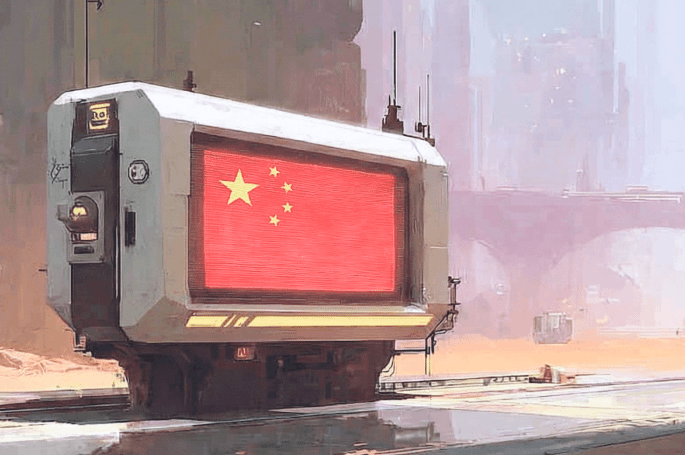
The Chinese AI Surge That’s Redefining Global Competition
China’s AI sector has quickly evolved into one of the most influential forces in global innovation. With more than 5,300 companies operating across a wide range of industries, China is helping redefine what large-scale AI deployment looks like. These rising innovators are accelerating AI commercialization, compressing innovation cycles, and raising the competitive bar for businesses worldwide.
Read now
The French AI Boom You Can’t Afford to Ignore in 2026
France has rapidly become one of Europe’s most influential AI growth markets, backed by major public investment and a surge in enterprise adoption. From generative AI and drug discovery to insurance automation and defense systems, French innovators are building globally competitive solutions across industries. Here’s a closer look at the companies helping position France at the center of the next wave of artificial intelligence.
Read nowEndless IT possibilities
Boost your productivity with Atera’s intuitive, centralized all-in-one platform