Generate summary with AI

Artificial intelligence (AI) investment in South Korea has surged over the past few years, positioning the country as one of Asia’s most dynamic technology ecosystems. Government-backed innovation programs, strong semiconductor manufacturing, and world-class research institutions have helped fuel the rise of hundreds of AI startups.
For global businesses watching emerging innovation hubs, South Korea’s AI sector offers a glimpse into the next generation of intelligent automation, predictive analytics, and AI-powered business infrastructure.
Key Takeaways
- South Korea is rapidly emerging as a major AI innovation hub, supported by strong government investment, world-class semiconductor manufacturing, and a growing ecosystem of more than 380 AI companies.
- The country’s AI market is expanding quickly, growing from about $5.47 billion in 2024 and projected to exceed $53 billion by 2032.
- AI startups are emerging across diverse industries, including healthcare diagnostics, service robotics, generative AI, conversational interfaces, enterprise data platforms, and semiconductor infrastructure.
- Strong structural advantages — such as government funding, corporate partnerships, advanced chip manufacturing, and a highly educated workforce — are positioning South Korea as a key player in the global AI economy.
South Korea’s AI Startup Ecosystem Is Growing Fast
South Korea has quickly become one of Asia’s most active centers for artificial intelligence innovation. Strong government funding, a highly educated engineering workforce, and global technology companies like Samsung, Naver, and LG have created a fertile environment for AI startups.
Recent data highlights how quickly the country’s AI ecosystem is expanding:
- South Korea has more than 380 AI companies, including 149 funded startups that have raised a total of $2.15 billion.
- The South Korean AI market was valued at about $5.47 billion in 2024 and is projected to exceed $53 billion by 2032.
- 45.5% of funded startups in Q3 2025 were AI-related, attracting approximately KRW 1 trillion in funding.
- South Korea ranks first globally for AI-related patents per 100,000 people, highlighting the country’s strong research and commercialization capabilities.
- The government is actively expanding AI investment, including a major national funding initiative aimed at integrating AI into dozens of industries and public services.
These trends illustrate why South Korea is increasingly seen as a prominent player in the global AI landscape. Advances in semiconductors, robotics, healthcare AI, and enterprise automation are converging to create a vibrant ecosystem where startups and major corporations collaborate to shape the future of artificial intelligence.
6 Notable AI Companies Emerging from South Korea
| Company | Sector | Core AI Focus | Enterprise Impact |
| Upstage | Enterprise Generative AI & Document Intelligence | Large language models, intelligent document processing, data extraction automation, enterprise AI workflows | Helps organizations transform unstructured documents into structured insights, automating knowledge workflows and improving enterprise data accessibility |
| Lunit | Healthcare AI & Medical Imaging | Deep learning radiology analysis, cancer detection algorithms, medical image recognition, predictive healthcare analytics | Supports earlier disease detection and improves diagnostic accuracy by assisting radiologists with AI-powered medical image analysis |
| Bear Robotics | Service Robotics & Intelligent Automation | Autonomous navigation, robotics control systems, AI-powered service robots, sensor-driven mobility | Automates operational tasks in restaurants and hospitality environments, reducing labor pressure and improving service efficiency |
| DeepBrain AI | Conversational AI & Digital Humans | AI avatar generation, speech synthesis, conversational AI, video AI generation | Enables organizations to deploy AI-powered virtual presenters and assistants for customer engagement, media production, and digital communication |
| Saltlux | Enterprise Knowledge AI & Data Intelligence | Natural language processing, knowledge graphs, enterprise search AI, data analytics platforms | Helps businesses organize complex datasets, enabling smarter decision-making and automated enterprise knowledge management |
| Rebellions | AI Semiconductor Infrastructure | AI accelerator chips, machine learning hardware, edge AI computing, data center optimization | Provides specialized processors designed to power high-performance AI workloads, supporting scalable machine learning infrastructure |
Upstage: Enterprise Generative AI
Many organizations struggle to extract insights from vast amounts of unstructured business data. Upstage develops generative AI models designed to help companies transform raw information into actionable intelligence. Its technology focuses on document processing, knowledge management, and data analysis for enterprise teams.
Key AI capabilities:
- Large language model development
- Intelligent document processing
- Data extraction automation
- Enterprise generative AI tools
By extracting insights from documents and databases, Upstage empowers businesses to automate complex information workflows.
Lunit: AI-Powered Medical Diagnostics
Healthcare providers increasingly rely on artificial intelligence for early disease detection and improved diagnostic accuracy. Lunit develops deep learning systems designed to analyze medical images and identify signs of cancer and other conditions. Its AI tools are used by hospitals and screening programs worldwide to support clinical decision-making.
Key AI capabilities:
- Medical image recognition
- AI-powered cancer detection
- Radiology decision support
- Predictive healthcare analytics
As healthcare systems around the world explore how AI can augment clinical processes, Lunit has become a key example of how machine learning can improve diagnostic precision at scale.
Bear Robotics: Autonomous Service Robots
Labor shortages and rising operational costs are pushing businesses to explore robotic automation. Bear Robotics builds AI-powered service robots designed to operate in restaurants, hotels, and hospitality environments. The company’s robots use AI navigation and sensor systems to move through complex indoor spaces, assisting staff with tasks like food delivery and logistics.
Key AI capabilities:
- Autonomous navigation systems
- AI-driven robotics control
- Operational workflow automation
- Human-robot collaboration
In 2025, LG acquired a majority stake in Bear Robotics, integrating the company’s autonomous service robot technology into LG’s broader global robotics strategy. As service industries increasingly adopt automation, companies like Bear Robotics are helping bridge the gap between AI research and real-world opportunities.
DeepBrain AI: AI Humans and Conversational Interfaces
Businesses are experimenting with AI-generated avatars and virtual assistants to improve customer engagement. DeepBrain AI develops synthetic humans capable of delivering customer support, news broadcasts, and educational content. Its technology combines computer vision, speech synthesis, and conversational AI to create realistic digital presenters.
Key AI capabilities:
- AI avatar generation
- Conversational AI systems
- Speech synthesis and recognition
- Video generation technology
AI avatars are gaining popularity across industries like banking, retail, and media, where companies are exploring scalable digital communication tools.
Saltlux: Enterprise Knowledge AI
Many organizations struggle to manage large knowledge databases across departments. Saltlux builds AI platforms that enable companies to analyze data, automate decision-making, and enhance enterprise search capabilities. Its systems are widely used in sectors such as finance, government services, and telecommunications.
Key AI capabilities:
- Natural language processing
- Knowledge graph technology
- AI-powered search systems
- Enterprise analytics platforms
By transforming fragmented corporate data into structured insights, Saltlux supports more efficient knowledge management and decision-making.
Rebellions: AI Semiconductor Infrastructure
As global demand for AI computing power surges, startups are racing to build specialized chips capable of competing with industry leaders like Nvidia. Rebellions has emerged as one of the country’s most closely watched AI hardware companies. The startup recently secured $178 million in funding from the National Growth Fund to accelerate development of its Rebel Quad chiplet architecture designed for next-generation AI workloads.
Key AI capabilities:
- AI accelerator chips
- Data center optimization
- Edge computing infrastructure
- AI hardware innovation
By developing high-performance processors tailored for machine learning systems, Rebellions is positioning South Korea as a serious contender in the global race for AI semiconductor dominance.
The Future of AI Innovation in South Korea
South Korea’s AI market continues to expand as startups, universities, and major corporations collaborate to push the boundaries of the technology.
Industry analysts estimate the global AI market will reach $4.8 trillion by 2033, and South Korea is positioning itself to capture a significant portion of that growth.
Several factors make the country particularly well-suited for AI development:
- Strong semiconductor industry: This enables advanced AI hardware, chips, and the data infrastructure needed to power machine learning systems.
- Government funding programs: National investment initiatives accelerate startup formation, research projects, and enterprise AI adoption.
- Highly educated workforce: South Korea produces a large number of engineers and AI researchers from top universities and technical institutes.
- Corporate partnerships: Major corporations such as Samsung, LG, and Naver provide investment, infrastructure, and scaling opportunities for startups.
Together, these advantages are helping South Korea establish itself as a major player in the global AI economy.
Global AI Innovation Is Expanding Everywhere
Artificial intelligence breakthroughs are increasingly emerging from innovation hubs around the world. Just as North American startups have advanced generative AI platforms and enterprise automation tools, other regions are building powerful infrastructures of their own.
South Korea’s growing network of AI startups highlights how industries such as robotics, healthcare, and enterprise intelligence are rapidly evolving through machine learning and advanced analytics.A similar wave of innovation is taking place in other regions as well. Our guide to Israel’s top AI companies explores how another fast-growing technology hub is advancing AI-driven automation, infrastructure management, and intelligent software platforms. Leading companies like Atera continue to demonstrate how AI-powered IT automation and intelligent operations are becoming essential tools for organizations seeking to scale efficiently in a data-driven world.
Related Articles

The Japanese AI Companies That Could Change Global Tech
Japan is rapidly emerging as a major hub for artificial intelligence innovation, with startups applying AI across manufacturing, healthcare, logistics, and enterprise automation. Companies like Preferred Networks, ABEJA, and ExaWizards are using machine learning and data intelligence to solve real-world business challenges. As labor shortages, robotics expertise, and government investment accelerate adoption, Japan’s AI sector offers valuable insights into the future of global technology. Here are eight Japanese AI companies gaining attention, along with some reasons business leaders should be watching them.
Read now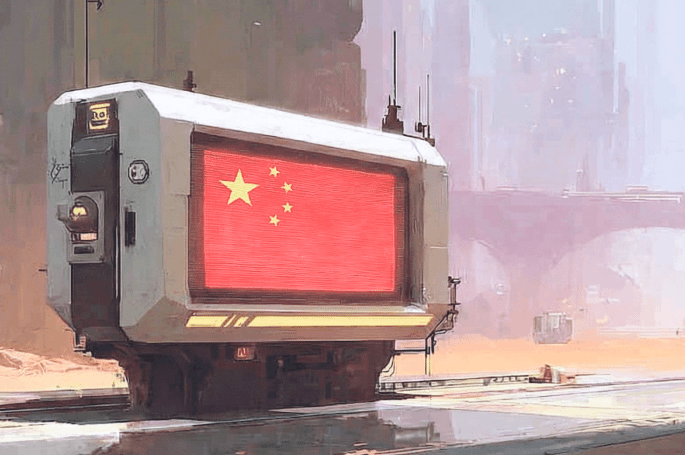
The Chinese AI Surge That’s Redefining Global Competition
China’s AI sector has quickly evolved into one of the most influential forces in global innovation. With more than 5,300 companies operating across a wide range of industries, China is helping redefine what large-scale AI deployment looks like. These rising innovators are accelerating AI commercialization, compressing innovation cycles, and raising the competitive bar for businesses worldwide.
Read now
The French AI Boom You Can’t Afford to Ignore in 2026
France has rapidly become one of Europe’s most influential AI growth markets, backed by major public investment and a surge in enterprise adoption. From generative AI and drug discovery to insurance automation and defense systems, French innovators are building globally competitive solutions across industries. Here’s a closer look at the companies helping position France at the center of the next wave of artificial intelligence.
Read now
India’s Rising AI Powerhouses and What They Mean for Business
India’s AI industry is growing rapidly, with homegrown companies delivering enterprise-ready solutions in decision intelligence, financial infrastructure, multilingual foundation models, media localization, and AI cloud platforms. These companies are building scalable technologies designed for global deployment from day one.
Read nowEndless IT possibilities
Boost your productivity with Atera’s intuitive, centralized all-in-one platform