
Table of contents
Generate summary with AI

To say that artificial intelligence (AI) is changing the landscape of work is an understatement. In an era already marked by rapid technological advancements, AI stands out as a revolutionary force capable of not just reshaping the global economy—but the nature of work itself.
Companies like Goldman Sachs are estimating that AI could give global GDP a boost of 7% (almost $7 trillion) over the next decade by lifting labor productivity. PwC, by comparison, put the number at a potential contribution of $15.7 trillion by 2030, with an up to 26% increase in GDP for local economies. Even by conservative estimates, AI is set to move the global economy forward significantly.
AI impact on employees & workplaces
The impacts of AI on the workforce are profound and multifaceted. According to a 2023 OECD employment outlook survey, a significant majority of employees in the finance and manufacturing sectors reported improvements in their performance, and mental and physical health due to AI integration.
However, the advancement of AI also brings in concerns and questions. A significant portion of the workers in these two sectors also expressed concerns about AI rendering their jobs obsolete within the next decade. This fear isn’t unfounded, as AI-related job cuts begin to surface in various reports—such as the Challenger report, which attributed 5% of all job eliminations to AI in May 2023, the first time it mentioned this new tech.
It’s essential to recognize the dual nature of technological innovation. While certain jobs may become redundant, new opportunities, particularly in AI and tech-related fields, are emerging. Gartner’s optimistic prediction suggests that AI could generate over half a billion jobs by 2033, emphasizing the need for a workforce skilled in AI technologies and applications.
AI and IT Departments: A paradigm shift
IT departments, traditionally the backbone of technological innovation within organizations, stand at the forefront of this seismic shift. According to Workato’s research, IT is in second place in terms of AI adoption, with 31% of all AI use cases, outpaced only by revenue ops with 48% of use cases.
The integration of AI within IT operations promises unparalleled efficiency, automation, and problem-solving capabilities. However, this transition requires IT professionals to adapt not just to new tools and strategies, but also to a new mindset that embraces intelligent systems.
Training and development become paramount as IT departments evolve to harness the power of AI. From automating routine tasks to employing advanced diagnostic algorithms, AI can significantly reduce manual workloads, allowing IT staff to focus on more strategic and impactful projects. Moreover, AI’s predictive analytics can foresee and mitigate potential system failures, enhancing overall organizational resilience.
Embracing AI for a brighter IT future
As the world grapples with the rapid pace of AI advancements, IT departments play a crucial role in navigating these changes. While AI continues to reshape the landscape of work, the focus should remain on leveraging these powerful tools to create more innovative, efficient, and fulfilling work environments.
When used wisely, AI can propel IT departments—and indeed entire organizations—into new realms of possibility and performance. By integrating platforms like Atera, IT professionals can not only enhance their efficiency and productivity but also contribute to their organizations’ overall success in the AI-driven future. Try it for yourself with a 30-day free trial.
Related Articles

The AI Startups Turning South Korea Into a Global Innovation Powerhouse
South Korea is rapidly emerging as one of the world’s most dynamic AI innovation hubs, fueled by strong government investment, advanced semiconductor manufacturing, and a growing startup ecosystem. From healthcare diagnostics and service robotics to generative AI and next-generation chips, a new wave of companies is shaping how artificial intelligence is applied across industries. This article highlights six South Korean AI companies gaining worldwide attention and the factors driving the country’s expanding role in the global AI economy.
Read now
The Japanese AI Companies That Could Change Global Tech
Japan is rapidly emerging as a major hub for artificial intelligence innovation, with startups applying AI across manufacturing, healthcare, logistics, and enterprise automation. Companies like Preferred Networks, ABEJA, and ExaWizards are using machine learning and data intelligence to solve real-world business challenges. As labor shortages, robotics expertise, and government investment accelerate adoption, Japan’s AI sector offers valuable insights into the future of global technology. Here are eight Japanese AI companies gaining attention, along with some reasons business leaders should be watching them.
Read now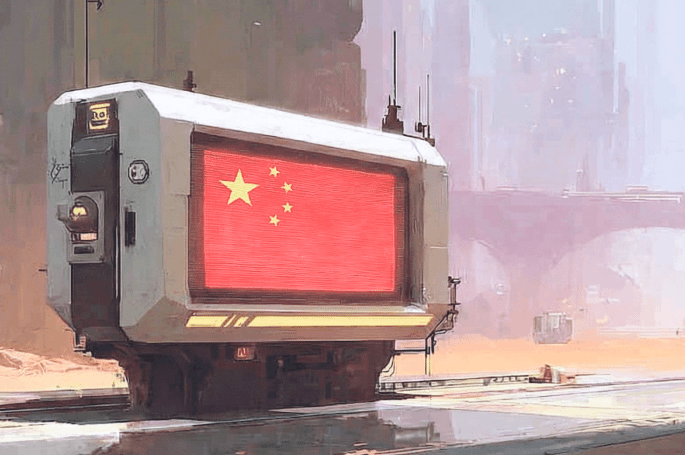
The Chinese AI Surge That’s Redefining Global Competition
China’s AI sector has quickly evolved into one of the most influential forces in global innovation. With more than 5,300 companies operating across a wide range of industries, China is helping redefine what large-scale AI deployment looks like. These rising innovators are accelerating AI commercialization, compressing innovation cycles, and raising the competitive bar for businesses worldwide.
Read now
The French AI Boom You Can’t Afford to Ignore in 2026
France has rapidly become one of Europe’s most influential AI growth markets, backed by major public investment and a surge in enterprise adoption. From generative AI and drug discovery to insurance automation and defense systems, French innovators are building globally competitive solutions across industries. Here’s a closer look at the companies helping position France at the center of the next wave of artificial intelligence.
Read nowEndless IT possibilities
Boost your productivity with Atera’s intuitive, centralized all-in-one platform