Table of contents
Generate summary with AI

Manual ticket-based support collapses when MSPs exceed the number of endpoints each technician can handle (and it’s not a large number), yet 63% of providers cite profitability as their top concern.
This collision between operational limits and economic reality forces MSPs to reject profitable contracts, lose clients to competitors, and watch margins evaporate as they struggle to scale. The solution isn’t hiring more technicians in a crippling talent shortage (4.8 million in cybersecurity alone); it’s deploying Autonomous IT systems that simplify the IT workload with adaptive, intelligent agents that perceive, reason, and act within policy-defined boundaries; escalating to humans only when confidence thresholds aren’t met.
The perfect storm threatening MSP survival
Manual ticket-based support creates operational bottlenecks that destroy profitability as organizations scale. The industry benchmark for profit (EBITDA margins) reached 14.1% in Q2 2024, but private equity-backed MSPs achieved 18.7%. The difference between top and bottom performers? Automation backed by Autonomous IT.
Clients expect Amazon-level service (instant, predictive, transparent) while many MSPs still deliver traditional support (tickets, delays, opacity). With 43% identifying customer acquisition as their primary challenge, MSPs must bridge the gap between operational efficiency and client satisfaction.
For example, Delap Cyber, an IT and cybersecurity provider in Oregon, improved response times from a full business day to just 15 minutes after adopting Atera, all while managing 17 locations and over 1,000 devices. Faster response time and more efficient operations makes scaling easier, which translates to real, measurable cost savings by allowing the team to do more with fewer resources
It’s worse in healthcare. With HIPAA compliance requirements spanning multiple facilities, MSPs struggle with manual security audits and complex medical device networks. Traditional remote monitoring and management tools often can’t handle the complexity of electronic health records and regulatory reporting requirements, forcing providers to seek more sophisticated solutions.
» Ready to break through scalability barriers? Explore MSP growth strategies
The talent crisis is compounding operational strain
The global cybersecurity workforce gap reached 4.8 million professionals in 2024, a 19% year-on-year increase, making traditional staffing models mathematically impossible. When service desk teams waste time on low-level ticket triage and resolution while senior engineers command $145,000+ salaries, the economics simply don’t work. There aren’t enough of the right people to fill traditional roles, so the roles and procedures need to change.
For example, Innovate IT, a Cape Town-based MSP managing over 2,300 endpoints with 21 technicians, struggled with 80 open tickets daily, straining their help desk team. After implementing Atera’s Autonomous IT, they reduced their daily ticket volume to just 35-40 tickets, a 50% reduction. This dramatic efficiency gain effectively doubled their team’s capacity without adding headcount.
Legacy systems are becoming extinction events
Legacy systems consume 60-80% of budgets according to U.S. Government analysis, while creating cascading vulnerabilities. MSPs using outdated platforms face significantly higher risks and operational challenges.
IBM’s research quantifies the cost: organizations using extensive security AI and automation save $2.2 million annually in breach costs. With breaches taking an average of 258 days to identify and contain, the true cost of maintaining legacy systems extends far beyond budget allocations.
Government analysis shows MSPs using legacy platforms older than 5 years experience the following:
- Higher breach probability rates
- Significantly longer mean time to detection (MTTD)
- Increased average breach costs
- Greater risk of compliance certification failures
» Concerned about legacy system vulnerabilities? Assess your security readiness
The integration nightmare is multiplying complexity
Tool sprawl has become a critical challenge, with 36% using 10+ security tools, while 30% rely on four to five vendors. Each integration adds complexity exponentially.
This complexity creates cascading failure risks. Integration delays between monitoring, ticketing, and remediation systems can cause hours of downtime, affecting significant portions of client bases during critical periods like Black Friday or end-of-quarter processing.
» Tired of managing tool sprawl? Discover unified IT management
How Autonomous IT transforms MSP operations
Predictive maintenance helps prevent failures using machine learning, enabling MSPs to fix issues before they turn into big problems. Auto-healing scripts configured with pre-checks, post-verification, and rollback criteria enable automated remediation within policy-defined thresholds, escalating complex issues to technicians with full context.
McKinsey research confirms that companies adopting automation can boost productivity by 30%. Additionally, IT departments report 52% ROI from automation, demonstrating clear financial benefits alongside operational improvements. And that’s just simple rule-based automation, but true autonomy goes a step further.
Platforms with autonomous ticketing capabilities like Atera’s Robin can resolve up to 40% of the IT workload without any input from IT staff (within pre-configured policy boundaries), and offers the following capabilities:
- Password resets: After it identifies that a user has been locked out of their computer from reaching the maximum allowed number of unsuccessful login attempts, it’ll immediately notify the end-user via email or SMS, prompting them to follow a streamlined process designed to unlock and reset their password securely.
- Device and cloud support: Diagnoses, troubleshoots, and resolves device issues locally and in the cloud with its RMM and Helpdesk integration.
- Proactive IT support: Proactively detects and addresses potential issues before they impact your workflow. By continuously monitoring your systems, it anticipates problems and provides personalized, actionable, data-driven insights to deliver accurate, real-time solutions.
- Escalation and better future resolution: If Autopilot discovers an issue it can’t fix, it escalates the problem to human technicians with a full summary of the conversation. AI Copilot then turns the resolution into a comprehensive knowledge base article that helps train Autopilot and human technicians simultaneously.
» Learn more about what Robin can do
The human-AI collaboration advantage
A critical but often-overlooked transformation is occurring in how MSPs structure their teams. Rather than replacing technicians, autonomy and automation elevate technical staff into more strategic roles. Texas-based Sagiss MSP exemplifies this approach: after deploying autonomous remediation technologies, Sagiss shifted Tier 1 agents toward client success functions, enabling improved customer outcomes and creating new upsell opportunities.
This human-AI collaboration model represents the true paradigm shift. Autonomous systems handle the “how” (routine tasks, monitoring, basic remediation) while humans focus on the “why” (strategy, relationships, complex problem-solving).
» Ready to multiply your team’s capacity? See Autonomous IT in action
Security that never sleeps
Modern MSPs protect billions in transactions daily using autonomous security capabilities that process thousands of security events per second. Organizations using extensive security AI and automation save $2.2 million annually, according to IBM’s 2024 data, but traditional manual approaches and simplified automation can’t keep pace with modern threats.
A better approach includes:
- Autonomous patch management
- Autonomous endpoint management
- Autonomous vulnerability management
- Autonomous network discovery
Autonomous IT with these features offer reduced patch times from weeks to hours and reduced attack surface, automatic detection and cataloging of network devices to provide instant alerts for newly connected devices and suspicious behavior, and machine learning engines that discover correlations between system behaviors, threat indicators, and exploitation patterns that no human-written rule could anticipate.
With breaches taking 258 days on average to detect and contain globally, the combination of automated patching, continuous network discovery, and real-time monitoring helps MSPs maintain security posture without the overhead of dedicated security operations centers.
Transform your MSP operations in 90 days
Traditional service models built on manual triage and reactive support can’t deliver the growth, profitability, and service quality modern clients demand. With talent shortages intensifying, labor costs consuming revenue, and clients expecting instant support, the math doesn’t work without transformation.
Autonomous IT represents a fundamental shift, moving from human-dependent workflows to intelligent systems that learn, adapt, and execute independently. MSPs implementing platforms like Atera are already seeing the benefits. Just look at ITernative, a Florida-based MSP that uses Atera to comfortably manage 550 endpoints with efficient, streamlined processes.
It’s time to embrace Autonomous IT so that you can keep up with the MSPs that are, or else you risk falling behind.
» Ready to begin? Start a free trial with Atera
Related Articles

The AI Startups Turning South Korea Into a Global Innovation Powerhouse
South Korea is rapidly emerging as one of the world’s most dynamic AI innovation hubs, fueled by strong government investment, advanced semiconductor manufacturing, and a growing startup ecosystem. From healthcare diagnostics and service robotics to generative AI and next-generation chips, a new wave of companies is shaping how artificial intelligence is applied across industries. This article highlights six South Korean AI companies gaining worldwide attention and the factors driving the country’s expanding role in the global AI economy.
Read now
The Japanese AI Companies That Could Change Global Tech
Japan is rapidly emerging as a major hub for artificial intelligence innovation, with startups applying AI across manufacturing, healthcare, logistics, and enterprise automation. Companies like Preferred Networks, ABEJA, and ExaWizards are using machine learning and data intelligence to solve real-world business challenges. As labor shortages, robotics expertise, and government investment accelerate adoption, Japan’s AI sector offers valuable insights into the future of global technology. Here are eight Japanese AI companies gaining attention, along with some reasons business leaders should be watching them.
Read now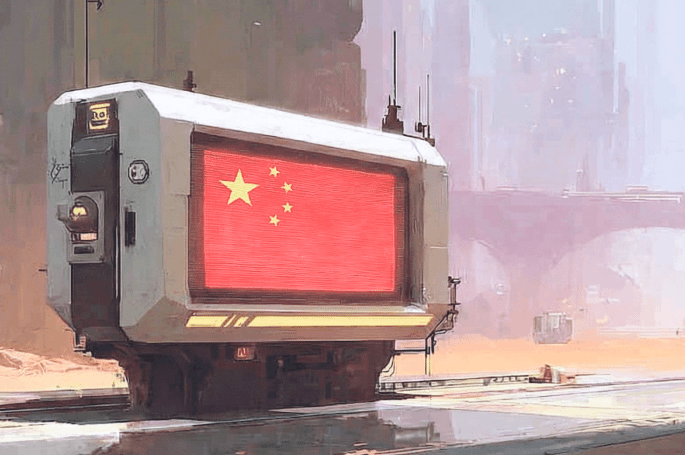
The Chinese AI Surge That’s Redefining Global Competition
China’s AI sector has quickly evolved into one of the most influential forces in global innovation. With more than 5,300 companies operating across a wide range of industries, China is helping redefine what large-scale AI deployment looks like. These rising innovators are accelerating AI commercialization, compressing innovation cycles, and raising the competitive bar for businesses worldwide.
Read now
The French AI Boom You Can’t Afford to Ignore in 2026
France has rapidly become one of Europe’s most influential AI growth markets, backed by major public investment and a surge in enterprise adoption. From generative AI and drug discovery to insurance automation and defense systems, French innovators are building globally competitive solutions across industries. Here’s a closer look at the companies helping position France at the center of the next wave of artificial intelligence.
Read nowEndless IT possibilities
Boost your productivity with Atera’s intuitive, centralized all-in-one platform