Table of contents
Table of contents
- 1. Mean time to resolution (MTTR)
- 2. First time to response (FTTR)
- 3. Ticket deflection percentage
- 4. End-user experience and satisfaction (EUX)
- 5. Proactive resolution rate (incidents prevented)
- Bonus metric: Technician productivity
- How Atera leads the AI Operations in IT revolution
- Final thoughts
Generate summary with AI

In today’s AI era, CIOs face a new challenge: how to measure success when technology no longer just supports business but should anticipate its needs. Traditional metrics like uptime or ticket volume no longer fully capture the power of automation, predictive analytics, and user experience.
As AI operations (AIOps) redefine what’s possible, these are the five essential metrics every CIO should track, with examples of how Atera, a recognized leader in the AIOps space, empowers organizations to excel across them.
1. Mean time to resolution (MTTR)
MMTR refers to the average time from issue detection to full resolution. Why does this metric matter? Lower MTTR means faster service restoration, reduced downtime, and improved resilience.
With Atera’s Robin, AI asks clarifying questions, runs diagnostics and health checks, and executes actions autonomously, cutting MTTR dramatically without technician intervention.
CIO tip: Track MTTR across incident categories and compare pre- and post-Autonomous IT performance to quantify ROI.
2. First time to response (FTTR)
FTTR refers to the time between an incident being reported and the first meaningful action taken. Why does this metric matter? A faster response improves perception of IT’s efficiency and reduces business disruption.
With an AI platform like Atera, IT support becomes seamlessly embedded in the employee experience. The system interacts through familiar channels such as Slack, Microsoft Teams, email, WhatsApp, and even through the service portal, responding instantly and triaging every request intelligently.
Example: A failed attempt to print a prescription document at one of the clinics triggers an AI workflow that restarts the printer spooler, runs health checks, verifies success, and notifies the technician of the resolved issue, all before the user submits a ticket.
Organizations using Robin to augment support see a near-zero wait time for first response.
3. Ticket deflection percentage
What does ticket deflection percentage mean? It’s the proportion of potential tickets resolved automatically or via self-service before reaching your IT team. Why does this metric matter? High deflection rates reduce technician workload and increase user satisfaction.
Atera’s Robin intelligently handles repetitive issues such as software installations, password resets, connectivity errors, and printer failures, allowing teams to focus on strategic initiatives. Atera customers using Robin report up to 40% reduction in IT workload and savings of around 35 hours per week.
CIO tip: Measure how many incidents are resolved autonomously each quarter and correlate with technician productivity metrics.
4. End-user experience and satisfaction (EUX)
EUX is a composite view of user sentiment, including response time, resolution quality, and ease of IT interaction. Why does this metric matter? IT success is measured not just by uptime, but by how well users can work without friction, and by cases they may have never addressed to IT.
With Atera’s Robin, CIOs can link user satisfaction scores directly to automation outcomes, proving how intelligent systems enhance employee experience.
““By 2026, 60% of CIOs will use experience-based metrics to measure digital success.””
CIO tip: Track CSAT (customer satisfaction) or NPS (net promoter score) for IT alongside automation usage rates. Improving both in tandem indicates successful AI adoption.
5. Proactive resolution rate (incidents prevented)
Proactive resolution rate measures the percentage of issues detected and resolved before end-users are affected. This is the true measure of AI maturity, ITT moving from reactive to predictive.
Atera’s Robin continually scans for system anomalies (disk space, CPU load, update failures) and fixes them before they disrupt users. It also identifies recurring issues and automatically suggests KBs or scripts to resolve them.
Example: A technician logs into Atera’s AI Center and instantly sees insights highlighting recurring device issues. The AI detects ticket patterns, suggests relevant knowledge base articles, and offers ready-to-run scripts for automated fixes.
From the dashboard, the technician can review, postpone, or implement recommendations. All insights are organized under three tabs (Available, Postponed, and Implemented), making it easy to track progress and manage autonomous actions efficiently.
CIO tip: Track the ratio of “prevented vs. reported incidents” monthly to visualize the evolution of your AI in IT maturity.
Bonus metric: Technician productivity
Why it matters: Every AI implementation that automates a repetitive task compounds technician efficiency. Atera data shows that technicians can handle more complex tickets leveraging AI agents like Robin to eliminate 40% of low-value work.
This metric ties directly to ROI, demonstrating how AI agents amplify your existing team rather than requiring more headcount.
How Atera leads the AI Operations in IT revolution
Atera has been recognized as a G2 Market Leader in AIOps and IT platforms and is redefining what modern IT looks like. Under the leadership of CTO Oshri Moyal, recently named among the top AI visionaries in IT, Atera’s mission is to make Autonomous IT accessible for every MSP and in-house team.
By embedding AI across all IT workflows, Atera enables CIOs to measure performance across every layer, from device uptime to user experience, using clear, actionable metrics.
“AI isn’t just transforming IT, it’s transforming how we measure IT.”
Oshri Moyal, CTO Atera
Final thoughts
The age of AI operations demands a new performance mindset. CIOs must move beyond traditional SLAs to metrics that measure responsiveness, intelligence, and experience.
Tracking MTTR, FTTR, ticket deflection, end-user experience, and proactive resolution rate provides the visibility and accountability modern enterprises need.
With platforms like Atera, AI isn’t replacing IT, it’s amplifying it, creating a foundation for 24/7 operations, proactive management, and data-driven leadership.
Related Articles

The AI Startups Turning South Korea Into a Global Innovation Powerhouse
South Korea is rapidly emerging as one of the world’s most dynamic AI innovation hubs, fueled by strong government investment, advanced semiconductor manufacturing, and a growing startup ecosystem. From healthcare diagnostics and service robotics to generative AI and next-generation chips, a new wave of companies is shaping how artificial intelligence is applied across industries. This article highlights six South Korean AI companies gaining worldwide attention and the factors driving the country’s expanding role in the global AI economy.
Read now
The Japanese AI Companies That Could Change Global Tech
Japan is rapidly emerging as a major hub for artificial intelligence innovation, with startups applying AI across manufacturing, healthcare, logistics, and enterprise automation. Companies like Preferred Networks, ABEJA, and ExaWizards are using machine learning and data intelligence to solve real-world business challenges. As labor shortages, robotics expertise, and government investment accelerate adoption, Japan’s AI sector offers valuable insights into the future of global technology. Here are eight Japanese AI companies gaining attention, along with some reasons business leaders should be watching them.
Read now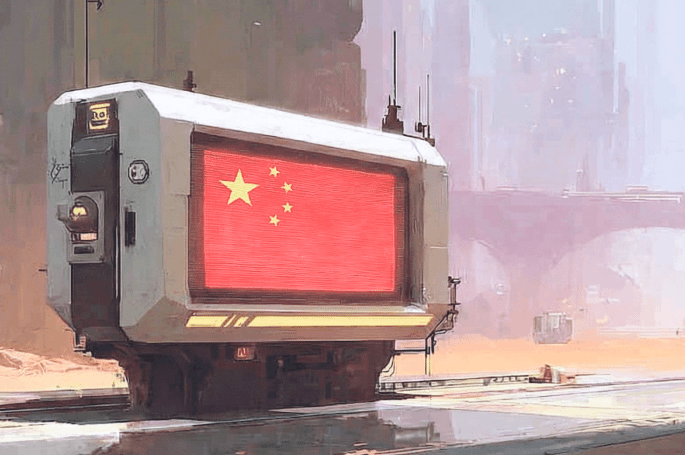
The Chinese AI Surge That’s Redefining Global Competition
China’s AI sector has quickly evolved into one of the most influential forces in global innovation. With more than 5,300 companies operating across a wide range of industries, China is helping redefine what large-scale AI deployment looks like. These rising innovators are accelerating AI commercialization, compressing innovation cycles, and raising the competitive bar for businesses worldwide.
Read now
The French AI Boom You Can’t Afford to Ignore in 2026
France has rapidly become one of Europe’s most influential AI growth markets, backed by major public investment and a surge in enterprise adoption. From generative AI and drug discovery to insurance automation and defense systems, French innovators are building globally competitive solutions across industries. Here’s a closer look at the companies helping position France at the center of the next wave of artificial intelligence.
Read nowEndless IT possibilities
Boost your productivity with Atera’s intuitive, centralized all-in-one platform