Table of contents
Table of contents
- How AI Reshaped Core Development Workflows
- AI Strengthens Security and Compliance Throughout the SDLC
- AI Improves Collaboration Across IT and Development Teams
- AI Enables Autonomous IT Support for Software Environments
- How AI Will Continue Transforming Software Development
- Creating Scalable, Intelligent Software Environments
Generate summary with AI

Artificial intelligence (AI) has rewritten the rules of software development. Tasks that once required hours of focused work on coding, testing, and documentation now move at lightning speed. Using AI-powered solutions, teams can deliver more stable results with fewer bottlenecks, marking a significant evolution in AI software development and how modern systems are built and maintained.
Key Takeaways
- AI software development accelerates delivery cycles by automating routine tasks like debugging, documentation, and code generation.
- Intelligent testing and security scanning reduce vulnerabilities and boost release quality.
- AI-enhanced collaboration improves handoffs between developers, quality assurance (QA) teams, and IT operations.
- Today’s tools can unify AI, automation, and remote monitoring and management capabilities to streamline software development end-to-end.
- AI software development enables IT teams to support multisite environments with proactive, scalable Tier 1 support.
How AI Reshaped Core Development Workflows
AI software development has streamlined many stages of the software development lifecycle (SDLC), from planning to deployment. It does this by converting time-consuming manual tasks into automated, intelligent workflows. AI’s impact on software development includes faster delivery, higher accuracy, and reduced friction points. These improvements span every phase of the lifecycle, from planning to deployment and beyond.
Faster Planning and Requirements Gathering
AI has significantly improved accuracy during software development planning. Today’s tools can analyze historical data, user behavior, and codebases to help teams more accurately estimate work and define project scope. Predictive analytics identifies potential slowdowns before coding begins, improving sprint planning and reducing rework.
Using AI, backlog grooming tools can assess dependencies, surface related tasks, and even suggest optimal sequencing. If your IT department manages large or distributed environments, this technology can dramatically reduce your administrative overhead and keep your workflows predictable.
AI-Driven Code Generation and Optimization
Generative AI in programming has become a foundational part of software development. Developers can now produce boilerplate code, database queries, and user interface elements in seconds, then refine results manually. This accelerates delivery while preserving oversight.
But even more important is AI’s ability to boost code quality. Intelligent engines analyze functions, architecture patterns, and performance data, then recommend:
- More efficient algorithms
- Better memory usage
- Simplified or refactored logic
- Dead code removal
Together, these improvements keep applications easier to maintain and boost resilience over time.
Smarter, Automated Testing at Scale
If you want to see the biggest AI impact on software development, testing is a great place to start. Using AI, testing platforms can map application logic, autogenerate test cases, and apply predictive analytics to surface likely defects. This substantially expands coverage while reducing human error and speeding up test cycles. Machine learning models detect failures earlier in the pipeline, which is particularly valuable in complex or distributed systems.
AI improves testing by:
- Predicting failure-prone areas
- Auto-generating regression tests
- Identifying flaky tests
- Prioritizing high-impact test paths
The result is a testing process that feels lighter, smarter, and far more proactive, helping your team catch important issues sooner and protect your product’s overall quality.
Continuous Integration and Continuous Deployment (CI/CD) Optimization
Teams are also seeing AI transform their CI/CD workflows. By analyzing run times, dependencies, and failure patterns, these tools can:
- Auto-parallelize critical jobs
- Suggest or implement pipeline optimizations
- Detect bottlenecks before developers encounter them
- Improve artifact management
These enhancements shorten development cycles and increase release frequency.
AI Strengthens Security and Compliance Throughout the SDLC
Security begins long before deployment. AI software development integrates continuous scanning, threat detection, and compliance validation into each phase, prioritizing security and reducing overall exposure.
AI supports stronger security and compliance by:
- Proactively identifying vulnerabilities using models trained on extensive datasets of known weaknesses, far outperforming manual scanning alone.
- Enforcing policies automatically by checking code-style rules, validating access controls, and monitoring adherence to standards like SOC 2 and HIPAA.
- Improving incident response by adding context to alerts, analyzing logs, and surfacing patterns that help teams eliminate false positives and respond more effectively.
AI’s role in security shifts it from a late-stage checkpoint to a continuous safeguard that strengthens every part of the development process. Learn more about how Atera helps IT teams automate workflows and integrate AI-driven defenses directly into their operational environment.
AI Improves Collaboration Across IT and Development Teams
As software systems grow more complex and distributed, AI improves communication, visibility, and collaboration across IT and development teams. These capabilities streamline shared workflows, reduce friction during handoffs, and help your teams stay aligned as your environment scales. Key improvements include automated documentation, smarter workload distribution, and enhanced operational monitoring.
AI supports cross-team collaboration by:
- Creating shared context with automated documentation: AI in programming can automatically generate API documentation, architecture summaries, system diagrams, change logs, and code explanations. This reduces friction during handoffs across development, security, QA, and IT operations.
- Distributing workloads more intelligently: AI monitors patterns across projects and teams, identifying developers and technicians who might be overloaded and suggesting balanced task allocation to support healthier, more sustainable cycles.
- Enhancing operational monitoring and visibility: With tools like remote monitoring and management software, AI helps IT teams detect performance issues early and collaborate with developers on proactive remediation before those issues cause disruptions.
These AI-driven capabilities make collaboration more seamless across your entire organization, helping you work together and respond to issues with great speed and clarity. For leaders looking to strengthen remote IT management and unify development and operations, Atera provides an AI-powered platform to centralize your workflows.
AI Enables Autonomous IT Support for Software Environments
AI software development doesn’t end with deployment. It also shifts how your environment is supported over time. AI in IT support tools can automate many of the tasks that once bogged teams down with mundane manual work. This helps you move from reactive troubleshooting to proactive operations.
With today’s AI-powered platforms, your team can:
- Automatically resolve Tier 1 issues before tickets ever reach a technician
- Generate scripts on demand to accelerate fixes and configuration changes
- Deploy updates and remediation actions across hundreds of devices at once
- Deliver proactive monitoring with minimal manual intervention
This is particularly valuable for IT departments supporting multisite environments like hospitals and medical centers, where even brief downtime disrupts operations. With AI-driven automation, you can keep uptime consistent while also reducing the day-to-day operational burden on your IT and development teams.
How AI Will Continue Transforming Software Development
The future looks promising for AI software development, with technology enabling even more dramatic improvements. In the near future, the industry is likely to see:
- Autonomous coding assistants embedded in integrated development environments (IDEs)
- Self-healing infrastructure powered by continuous AI monitoring
- Fully automated security governance
- Intelligent resource scaling
- Predictive maintenance for cloud-native systems
As AI capabilities evolve, IT and development teams will shift from tactical troubleshooting to high-level architectural strategy.
Creating Scalable, Intelligent Software Environments
AI has fundamentally reshaped software development, from planning and coding to testing, deployment, and long-term support. AI software development tools bring more efficient cycles, stronger releases, and smoother operations across every environment.
With AI Copilot and IT Autopilot, Atera empowers organizations to automate routine workloads, deliver proactive Tier 1 support, and maintain stable, scalable systems across every location. The result is faster innovation, higher uptime, and future-ready IT operations.
Ready to experience how AI can help your IT team? Sign up for our free 30-day trial and see how Atera’s AI automation can help your IT support team.
Related Articles

The AI Startups Turning South Korea Into a Global Innovation Powerhouse
South Korea is rapidly emerging as one of the world’s most dynamic AI innovation hubs, fueled by strong government investment, advanced semiconductor manufacturing, and a growing startup ecosystem. From healthcare diagnostics and service robotics to generative AI and next-generation chips, a new wave of companies is shaping how artificial intelligence is applied across industries. This article highlights six South Korean AI companies gaining worldwide attention and the factors driving the country’s expanding role in the global AI economy.
Read now
The Japanese AI Companies That Could Change Global Tech
Japan is rapidly emerging as a major hub for artificial intelligence innovation, with startups applying AI across manufacturing, healthcare, logistics, and enterprise automation. Companies like Preferred Networks, ABEJA, and ExaWizards are using machine learning and data intelligence to solve real-world business challenges. As labor shortages, robotics expertise, and government investment accelerate adoption, Japan’s AI sector offers valuable insights into the future of global technology. Here are eight Japanese AI companies gaining attention, along with some reasons business leaders should be watching them.
Read now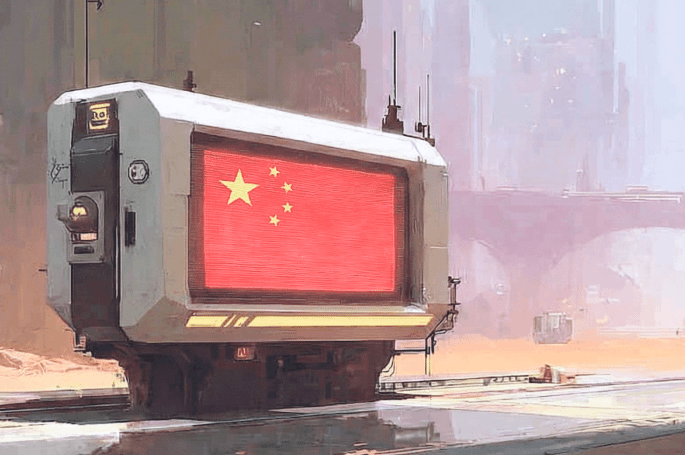
The Chinese AI Surge That’s Redefining Global Competition
China’s AI sector has quickly evolved into one of the most influential forces in global innovation. With more than 5,300 companies operating across a wide range of industries, China is helping redefine what large-scale AI deployment looks like. These rising innovators are accelerating AI commercialization, compressing innovation cycles, and raising the competitive bar for businesses worldwide.
Read now
The French AI Boom You Can’t Afford to Ignore in 2026
France has rapidly become one of Europe’s most influential AI growth markets, backed by major public investment and a surge in enterprise adoption. From generative AI and drug discovery to insurance automation and defense systems, French innovators are building globally competitive solutions across industries. Here’s a closer look at the companies helping position France at the center of the next wave of artificial intelligence.
Read nowEndless IT possibilities
Boost your productivity with Atera’s intuitive, centralized all-in-one platform