
Generate summary with AI

India has emerged as one of the world’s most dynamic artificial intelligence (AI) innovation hubs, driven by deep technical talent and a growing enterprise appetite for automation and infrastructure modernization. From decision intelligence and financial risk modeling to multilingual foundational models and AI-powered media localization, Indian companies are building platforms that help global businesses operate smarter and scale faster.
For business leaders, understanding this ecosystem reveals where AI is delivering measurable operational impact.
Key Takeaways
- India’s AI ecosystem has evolved beyond services into scalable, product-led enterprise platforms.
- Startups are solving high-impact challenges in decision intelligence, risk modeling, conversational automation, multilingual AI, and AI infrastructure.
- Many Indian AI companies are built for global enterprise clients from inception.
- Cost-efficient innovation supports scalable AI deployment across international markets.
- Global AI leadership increasingly spans North America, Israel, and India as interconnected innovation hubs.
India’s Expanding AI Innovation Landscape
Artificial intelligence adoption in India is accelerating across public policy, private investment, and enterprise deployment. The country’s AI ecosystem reflects measurable momentum in startup growth, talent concentration, and digital infrastructure expansion. The scale of India’s AI ecosystem is clear in the data:
- India hosts around 1,780 artificial intelligence companies, with roughly 482 funded ventures collectively raising more than $4.3 billion.
- The generative AI landscape scaled nearly 3.7 times between 2024 and 2025.
- Tech employment tied to AI and digital ecosystems exceeds six million workers.
- Around 87% of enterprises report actively using AI solutions.
These figures show that India’s AI industry is not only expanding in startup numbers but also integrating into business operations and driving job creation. Israel’s AI innovation landscape is maturing rapidly and producing commercially viable, enterprise-oriented solutions.
6 Indian AI Companies Worth Watching
| Company | Sector | Core AI Focus | Enterprise Impact |
| Fractal Analytics | Enterprise Decision Intelligence | Predictive analytics, demand forecasting, AI-driven decision platforms | Embeds AI into strategic planning, improving forecasting accuracy, marketing performance, and operational efficiency |
| Haptik | Conversational AI & Customer Experience | Natural language processing, chatbot automation, voice bots | Automates large-scale customer engagement while improving response times and reducing support costs |
| Arya.ai | Financial Services AI Infrastructure | Credit risk modeling, fraud detection, regulatory AI governance | Strengthens compliance, enhances risk visibility, and enables explainable AI in regulated financial environments |
| Sarvam AI | Multilingual Foundational Models | Large language models for Indic languages, contextual embeddings | Expands AI accessibility across diverse language markets, enabling broader enterprise and public sector adoption |
| NeuralGarage | Media & Content Localization | AI-driven lip synchronization, generative audiovisual alignment | Accelerates multilingual video distribution and reduces localization costs for global media companies |
| Neysa | AI Infrastructure & Cloud Platforms | Managed GPU cloud, MLOps tooling, AI workload optimization | Enables enterprises to scale AI from pilot to production with secure, performance-optimized infrastructure |
Fractal Analytics: Enterprise Design Intelligence
Global enterprises collect massive volumes of operational and customer data, yet many struggle to convert that data into consistent decision-making frameworks. Fractal Analytics focuses on incorporating AI into strategic and operational decisions, helping executives reduce uncertainty across marketing, supply chain, and financial planning.
Key AI capabilities:
- Predictive analytics for customer trends
- AI-powered supply chain forecasting
- Machine learning model deployment at enterprise scale
- Decision intelligence platforms for executives
By operationalizing AI inside core workflows, Fractal highlights how Indian AI companies are moving beyond analytics dashboards into real-time decision execution.
Haptik: Conversational AI for Customer Engagement
Consumers now expect instant, intelligent digital interactions. Haptik equips global brands to automate customer conversations using AI-powered chatbots and virtual assistants across messaging apps, websites, and voice platforms.
Key AI capabilities:
- Natural language processing and multilingual chatbots
- AI-driven customer service automation
- Workflow integration into CRM systems
- Voice-enabled enterprise bots
As conversational AI becomes a primary engagement channel, Haptik demonstrates how intelligent automation can improve responsiveness while controlling support costs.
Arya.ai: AI Infrastructure for Financial Services
Banks and insurers face mounting pressure around regulatory compliance, fraud prevention, and credit risk management. Arya.ai develops enterprise-grade AI infrastructure tailored specifically to the financial sector.
Key AI capabilities:
- Credit risk modeling and scoring
- Fraud detection and anomaly monitoring
- Model governance and lifecycle management
- Compliance-focused AI frameworks
Through explainable and secure AI systems, Arya.ai reflects how Indian AI companies are reinforcing trust and oversight in highly regulated markets.
Sarvam AI: Multilingual Foundation Models
Building AI that understands India’s linguistic diversity is critical for broad digital adoption. Sarvam AI develops large language models tailored to Indian languages and local contexts, aiming to bridge the gap between global generative AI and regional communication needs.
Key AI capabilities:
- Multilingual large language models focused on Indic languages
- Contextual embeddings for Indian language semantics
- Foundation models for custom enterprise tasks
- Scalable inference for text, dialogue, and search
By investing in language-native AI, Sarvam addresses areas where global models often underperform, enabling businesses and public services to interact in the languages their users actually speak.
NeuralGarage: Audiovisual AI for Media Production
The explosion of video content across streaming, gaming, and digital marketing demands intelligent tooling that goes beyond text. NeuralGarage meets this demand with VisualDub, its AI-powered technology that automatically syncs lip movement to translated speech, enabling high-quality multilingual dubbing without reshoots or manual editing.
Key AI capabilities:
- Generative audiovisual synchronization
- AI-powered translation for video content
- Automated lip and speech matching across languages
- Media localization and content scaling
This positions NeuralGarage at the intersection of AI and creative production, helping media companies automate labor-intensive tasks and expand into global markets without excess cost or manual effort.
Neysa: AI Infrastructure and GPU-Powered MLOps
As enterprises build proprietary models and GenAI services, the need for scalable infrastructure becomes mission-critical. Neysa offers AI acceleration, managed graphics processing unit (GPU) cloud, and platform tools that help companies deploy and optimize their machine learning workflows.
Key AI capabilities:
- Managed GPU cloud for AI training and inference
- Machine Learning Operations (MLOps) tooling and model lifecycle support
- Autonomous network monitoring
- AI security and performance analytics
By enabling reliable, enterprise-grade training and deployment environments, Neysa addresses a foundational change in AI adoption—scaling from prototype to production.
What Makes Indian AI Companies Stand Out
India’s artificial intelligence ecosystem is not defined by hype. It’s defined by execution. The country’s startups combine deep technical expertise with commercial practicality, building AI products designed to function at enterprise scale from the outset.
Several structural advantages keep India’s AI companies competitive:
Deep Engineering Talent and Technical Scale
India produces more than 1.5 million engineering graduates each year, creating one of the largest technical talent pools in the world. The country ranks third in global AI competitiveness, bested only by the United States and China, and its rapidly expanding AI talent pool is listed as a top reason.
This technical density accelerates research commercialization. Instead of remaining in academic labs, AI models are being rapidly integrated into enterprise platforms, from multilingual large language models to production-ready MLOps infrastructure. The result is faster iteration cycles and quicker time to market.
Cost-Efficient Product Development
Indian startups often achieve more with less. Lower operating costs allow companies to extend innovation cycles, refine models thoroughly, and validate enterprise use cases before scaling.
For business customers, that efficiency means competitively priced AI solutions without compromising performance. Organizations can deploy advanced technology at scale while maintaining cost predictability and long-term sustainability.
Enterprise-First Mindset
Unlike consumer-facing AI experiments, many Indian AI firms launch with enterprise use cases at the core. Whether focused on compliance automation, infrastructure scaling, or localization technologies, these companies often design for measurable return on investment from day one.
This enterprise orientation reduces friction in adoption. Products are built to fit into existing IT ecosystems, support governance standards, and align with regulated industry requirements. These are all key considerations for chief financial officers and chief information officers evaluating AI investment.
Global Market Orientation
Indian AI startups rarely build for the domestic market alone. From the beginning, many design products to serve North America, Europe, and Asia-Pacific simultaneously. English fluency, global delivery experience, and distributed engineering teams make this international focus practical.
For enterprise buyers, that global mindset reduces friction. These providers are accustomed to multi-region compliance, localization requirements, and large-scale deployments across borders.
Why Business Leaders Should Pay Attention
Artificial intelligence adoption is no longer an experimental initiative. Organizations using AI at scale report cost reductions and revenue increases in core business functions.
Indian firms are increasingly included in these success stories. Whether powering enterprise decision intelligence, strengthening financial risk controls, enabling multilingual AI development, accelerating video localization, or supporting scalable AI infrastructure, their platforms contribute directly to operational efficiency and revenue growth.
Where AI Innovation Connects
India’s AI industry currently serves as a primary engine for enterprise-grade innovation, with startups delivering the scalable platforms necessary for global infrastructure modernization. This momentum is closely mirrored by Israel’s top AI companies, which have become global leaders in the specialized sectors of cybersecurity and advanced automation.
Leading Israeli firms like Atera are at the forefront of this shift, utilizing agentic AI tools such as Copilot and Autopilot to redefine IT management. By moving beyond simple scripts to intelligent, autonomous workflows, these organizations are proving that AI can manage complex organizational infrastructure at scale. Across every region, the integration of such “agentic” intelligence is no longer an elective; it is the foundation for operational efficiency and long-term resilience in a competitive global market.
Related Articles

The AI Startups Turning South Korea Into a Global Innovation Powerhouse
South Korea is rapidly emerging as one of the world’s most dynamic AI innovation hubs, fueled by strong government investment, advanced semiconductor manufacturing, and a growing startup ecosystem. From healthcare diagnostics and service robotics to generative AI and next-generation chips, a new wave of companies is shaping how artificial intelligence is applied across industries. This article highlights six South Korean AI companies gaining worldwide attention and the factors driving the country’s expanding role in the global AI economy.
Read now
The Japanese AI Companies That Could Change Global Tech
Japan is rapidly emerging as a major hub for artificial intelligence innovation, with startups applying AI across manufacturing, healthcare, logistics, and enterprise automation. Companies like Preferred Networks, ABEJA, and ExaWizards are using machine learning and data intelligence to solve real-world business challenges. As labor shortages, robotics expertise, and government investment accelerate adoption, Japan’s AI sector offers valuable insights into the future of global technology. Here are eight Japanese AI companies gaining attention, along with some reasons business leaders should be watching them.
Read now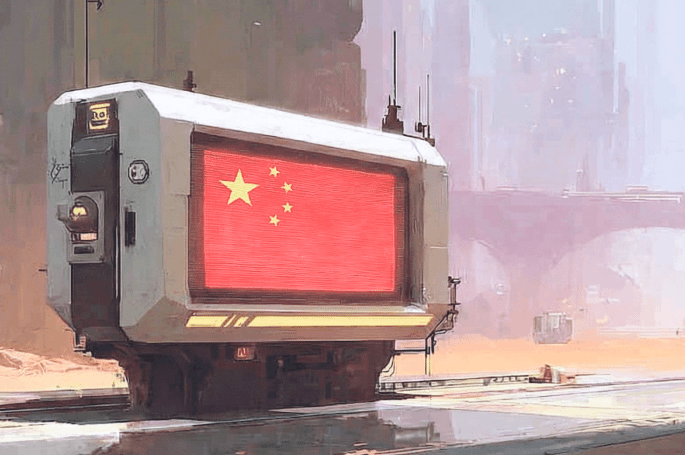
The Chinese AI Surge That’s Redefining Global Competition
China’s AI sector has quickly evolved into one of the most influential forces in global innovation. With more than 5,300 companies operating across a wide range of industries, China is helping redefine what large-scale AI deployment looks like. These rising innovators are accelerating AI commercialization, compressing innovation cycles, and raising the competitive bar for businesses worldwide.
Read now
The French AI Boom You Can’t Afford to Ignore in 2026
France has rapidly become one of Europe’s most influential AI growth markets, backed by major public investment and a surge in enterprise adoption. From generative AI and drug discovery to insurance automation and defense systems, French innovators are building globally competitive solutions across industries. Here’s a closer look at the companies helping position France at the center of the next wave of artificial intelligence.
Read nowEndless IT possibilities
Boost your productivity with Atera’s intuitive, centralized all-in-one platform