Generate summary with AI

Australia’s AI ecosystem has matured quickly, fueled by strong university research, growing venture capital investment, and an expanding startup culture. Rather than focusing on abstract innovation, many AI companies in Australia are applying machine learning and automation to solve tangible problems. The result is a wave of startups quietly gaining global relevance across
Key Takeaways
- Australian AI companies are delivering practical solutions across healthcare, energy, cybersecurity, education, and infrastructure.
- Sydney is home to more than 3,000 tech startups, with AI among the fastest-growing sectors.
- Applied AI is driving real-world adoption, not just research demos.
- Australia is emerging as a serious global AI innovation hub alongside North America and Israel.
Australia’s AI Startup Ecosystem at a Glance
When it comes to technology innovation, Sydney is Australia’s powerhouse, boasting more than 3,000 technology startups. These businesses are supported by a combination of government funding, academic research, and private investment. Artificial intelligence (AI) has become one of the most active areas within Australia’s tech sector, with companies moving rapidly from pilot projects to commercial deployment.
Recent data shows just how quickly the country has embraced AI:
- 1,500+ AI-focused companies operate in Australia, developing and selling AI-driven products and services across healthcare, agriculture, environmental science, and professional services.
- Australian researchers produce nearly 2% of global AI research publications, far exceeding the country’s share of global population and gross domestic product, demonstrating its commitment to artificial intelligence research and development.
- 470+ VC-backed Australian AI startups now hold a combined $11.7 billion USD in enterprise value, reflecting strong investor confidence and commercial maturity.
- More than $460 million AUD in government funding has been committed to AI and related technologies under Australia’s National AI Plan, accelerating adoption and long-term capability development nationwide.
- 81% of Australian startups already use AI, compared to 61% of large enterprises, and startups are more than twice as likely to build entirely AI-native products rather than retrofit existing systems.
Together, these signals show why Australia has become fertile ground for AI companies operating far beyond traditional tech categories.
7 Top AI Companies in Australia
| Company | Sector | Core AI Focus | Enterprise Impact |
| Harrison.ai | Healthcare and Medical Imaging | Clinical-grade computer vision for radiology and pathology diagnostics | Improves diagnostic accuracy |
| Kasada | Cybersecurity and Fraud Prevention | Behavioral biometrics and real-time bot detection | Protects digital platforms from fraud and automated attacks |
| Evergen | Energy and Sustainability | Machine learning for energy forecasting, storage optimization, and grid coordination | Enables more efficient, resilient use of renewable energy |
| Breaker | Infrastructure and Smart Cities | AI-driven mobility analytics and predictive infrastructure modeling | Helps governments and enterprises improve urban planning |
| Forage | Education and Workforce Development | AI-powered virtual work simulations and personalized learning pathways | Expands access to practical career experience and improves workforce readiness |
| Relevance AI | Data Intelligence and Semantic Search | Vector databases, semantic search, and autonomous AI agents | Unlocks insights from unstructured data and enables AI-driven decision-making |
| Marqo | Data, Search, and Recommendations | Deep learning-powered semantic search and recommendation systems | Enhances information discovery and personalization across large-scale data environments. |
Harrison.ai: AI for Healthcare Diagnostics
Harrison.ai builds clinical-grade AI systems that support faster, more accurate medical diagnoses. The company focuses on high-stakes environments like radiology and pathology, where accuracy, explainability, and regulatory compliance are essential. By embedding AI directly into diagnostic workflows, Harrison.ai helps clinicians reduce backlogs and improve patient outcomes.
Key AI capabilities:
- Medical imaging analysis for radiology and pathology
- Computer vision models trained on large, high-quality clinical datasets
- Decision support tools designed to assist, not replace, clinicians
- AI models developed to meet global healthcare regulatory standards
Harrison.ai stands out globally for proving that AI can be trusted in life-critical scenarios, helping raise the bar for responsible AI deployment in healthcare worldwide.
Kasada: Cybersecurity and Fraud Prevention
Kasada applies AI to detect and block automated threats such as bots, credential stuffing, and online fraud. Instead of relying on static rules or signatures, the platform uses behavioral analysis to distinguish between legitimate usage and malicious activity in real time.
Key AI capabilities:
- Behavioral biometrics and pattern recognition
- Real-time bot detection without CAPTCHA friction
- Adaptive machine learning models that evolve with new threat patterns
- Fraud prevention across web and mobile environments
By prioritizing user experience alongside security, Kasada demonstrates how AI can protect digital ecosystems without introducing new barriers. This balance is especially critical for global online platforms operating at scale.
Evergen: Energy and Sustainability
Evergen operates at the intersection of AI and clean energy, using machine learning to optimize distributed energy resources like solar panels, batteries, and grid-connected systems. Its platform helps organizations forecast demand, manage storage, and reduce energy waste.
Key AI capabilities:
- Energy demand forecasting and optimization
- Real-time analytics for distributed energy assets
- Predictive modeling for renewable energy generation
- AI-driven coordination of grid-connected systems
Evergen’s work highlights how AI is becoming a cornerstone technology for the global transition to cleaner, more resilient energy systems.
Breaker: Infrastructure and Smart Cities
With headquarters in both the U.S. and Sydney, Breaker uses artificial intelligence to process and analyze massive volumes of mobility and transportation data. Its insights support smarter urban planning, more efficient traffic management, and data-driven infrastructure investment decisions.
Key AI capabilities:
- Large-scale data aggregation and pattern analysis
- Mobility and traffic flow modeling
- Predictive analytics for infrastructure planning
- AI-powered dashboards for public sector decision-making
As cities around the world grapple with congestion and sustainability challenges, Breaker shows how artificial intelligence can inform long-term urban transformation.
Forage: Education and Workforce Development
Forage develops AI-enhanced virtual work experiences that help students and early-career professionals build practical skills. By partnering with universities and employers, the platform bridges the gap between education and workforce readiness.
Key AI capabilities:
- Personalized learning pathways
- Skills-based assessment and feedback
- Data-driven insights into learner performance
- Scalable simulation environments for career training
Forage shows how AI can democratize access to professional experience, expanding economic opportunity on a global scale.
Relevance AI: Data Intelligence and Semantic Search
Built on a foundation of vector databases and autonomous agents, Relevance AI enables businesses to unlock deeper insights from complex, unstructured data. Its platform is designed for applications like semantic search, personalized recommendations, and AI-driven decision support, helping organizations identify patterns without extensive in-house machine-learning expertise.
Key AI capabilities:
- Semantic search and vector indexing to power meaning-based data retrieval
- AI agent orchestration for autonomous workflows across data sources
- No-code/low-code tooling for rapid machine learning deployment without large engineering teams
- Scalable, enterprise-ready infrastructure suitable for production use
Sydney-based Relevance AI has attracted global attention and investment, including a $37 million USD funding round led by international backers, highlighting global confidence in Australian AI innovation.
Marqo: Data, Search, and Recommendations
Marqo specializes in semantic search and recommendation technology powered by deep learning. Unlike traditional keyword-based search, Marqo enables systems to retrieve information based on meaning and context.
Key AI capabilities:
- Semantic vector search
- Natural language understanding
- Recommendation engines driven by contextual relevance
- Large-scale data indexing and retrieval
Marqo’s technology illustrates how AI is reshaping the way people discover, understand, and interact with information across industries.
What Sets Australian AI Companies Apart
Across healthcare, cybersecurity, energy, education, infrastructure, and data platforms, a few defining characteristics consistently emerge among leading AI companies in Australia. Together, these traits explain why Australia has become an increasingly influential contributor to the global AI ecosystem.
The top features setting these businesses apart are:
- A strong applied focus: Australian AI companies prioritize real-world deployment over experimentation or theoretical breakthroughs. Operating in high-stakes environments like healthcare and energy has driven an emphasis on accuracy, reliability, and regulatory readiness.
- Depth over breadth in specialization: Rather than building generic platforms, many Australian AI companies focus deeply on specific industries or problem domains. This specialization allows for models that solve clearly defined challenges better than broader, less targeted approaches.
- Cross-industry adoption beyond traditional tech: AI innovation in Australia extends well beyond software and data services into sectors like healthcare, clean energy, education, and urban planning. This breadth shows how AI is becoming foundational infrastructure across the broader economy, not just within tech-first organizations.
- Built for global relevance from inception: With a relatively small domestic market, Australian AI companies often design their products for international users from day one. This has encouraged scalable architectures, strong interoperability, and global regulatory awareness early in development.
Taken together, these characteristics show why AI companies in Australia continue to gain international attention. By combining practical deployment, focused expertise, and global ambition, they play an important role in shaping the next phase of artificial intelligence adoption worldwide.
Australia in the Global AI Conversation
Australia’s rise in artificial intelligence mirrors a broader global shift toward distributed innovation hubs. While North America continues to dominate headlines, other regions are quietly shaping how artificial intelligence is adopted and deployed across the globe. This shift is most evident when looking at Israel’s top AI companies, which are pushing boundaries in automation, cybersecurity, and enterprise software. Leading Israeli companies like Atera, known for advancing AI-driven automation and intelligent platforms, illustrate how innovation is increasingly coming from a global network rather than a single location. Together, these developments reflect how AI has become a shared driver of change across industries.
Related Articles

The AI Startups Turning South Korea Into a Global Innovation Powerhouse
South Korea is rapidly emerging as one of the world’s most dynamic AI innovation hubs, fueled by strong government investment, advanced semiconductor manufacturing, and a growing startup ecosystem. From healthcare diagnostics and service robotics to generative AI and next-generation chips, a new wave of companies is shaping how artificial intelligence is applied across industries. This article highlights six South Korean AI companies gaining worldwide attention and the factors driving the country’s expanding role in the global AI economy.
Read now
The Japanese AI Companies That Could Change Global Tech
Japan is rapidly emerging as a major hub for artificial intelligence innovation, with startups applying AI across manufacturing, healthcare, logistics, and enterprise automation. Companies like Preferred Networks, ABEJA, and ExaWizards are using machine learning and data intelligence to solve real-world business challenges. As labor shortages, robotics expertise, and government investment accelerate adoption, Japan’s AI sector offers valuable insights into the future of global technology. Here are eight Japanese AI companies gaining attention, along with some reasons business leaders should be watching them.
Read now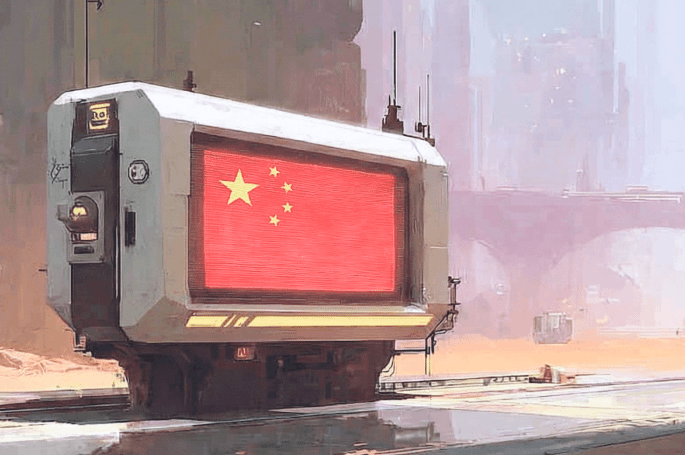
The Chinese AI Surge That’s Redefining Global Competition
China’s AI sector has quickly evolved into one of the most influential forces in global innovation. With more than 5,300 companies operating across a wide range of industries, China is helping redefine what large-scale AI deployment looks like. These rising innovators are accelerating AI commercialization, compressing innovation cycles, and raising the competitive bar for businesses worldwide.
Read now
The French AI Boom You Can’t Afford to Ignore in 2026
France has rapidly become one of Europe’s most influential AI growth markets, backed by major public investment and a surge in enterprise adoption. From generative AI and drug discovery to insurance automation and defense systems, French innovators are building globally competitive solutions across industries. Here’s a closer look at the companies helping position France at the center of the next wave of artificial intelligence.
Read nowEndless IT possibilities
Boost your productivity with Atera’s intuitive, centralized all-in-one platform