Table of contents
Table of contents
For years, enterprise IT was judged on stability: uptime, ticket volume, and how fast problems got fixed. Now, those metrics are expected to be even higher, accelerated exponentially by automation and AI in enterprise IT.
According to Atera’s recent survey of more than 1,000 enterprise IT leaders, AI is fundamentally reshaping what it means to lead IT, alongside the business expectations from its leaders. Today, the IT leadership evolution is in full swing: it’s gone far beyond just keeping the lights on and far more about driving measurable business value, enabling growth, and optimizing how humans and AI work together across the organization.
From IT support to transformation leadership
One of the clearest signals from our research: AI has accelerated the shift in the role of IT leaders. Nearly two-thirds of IT leaders say their role has evolved in the last two to three years because of AI, with many now responsible for business alignment, innovation, and enterprise-wide strategy, not just technology operations.
CIOs are increasingly acting as “chief integration officers,” connecting data, systems, people, and AI into a cohesive operating model. And this change isn’t happening in isolation. Executive support for AI initiatives is growing, and leaders report clearer, more measurable results than they did just a year ago.
AI’s impact goes far beyond IT
While AI adoption often starts in IT, it rarely lives in a vacuum. Our survey suggests that AI is now embedded across departments like HR, finance, operations, and customer experience. Most leaders say AI is already influencing productivity, efficiency, governance, customer satisfaction, and even revenue growth across the business.
Long story short: AI has become a cornerstone of enterprise infrastructure, not just another tool in the IT stack.
The biggest blocker isn’t ambition, but execution
Despite widespread enthusiasm and openness to AI, our report highlights a persistent challenge: implementing AI in enterprise IT successfully (rolling out, integrating, encouraging adoption, setting up guardrails, etc.). Many organizations still struggle with unclear ownership, fragmented governance, and the complexity of rolling AI out at scale. Only a small percentage of enterprises say AI ownership is fully defined and standardized, slowing progress and increasing risk.
Theoretical buy-in isn’t to blame for the gap. It’s more about moving from pilots and experiments to real ROI and replicable outcomes.
Why autonomy changes everything
One of the most promising developments that came up in our research is the proliferation of autonomous AI agents. These agents present opportunities when it comes to boosting efficiency. In fact, a handful of agents on the market can already resolve a large share of Tier-1 IT issues without human involvement, freeing teams to focus on cybersecurity, employee experience, innovation, and strategic initiatives, and boosting IT business value altogether.
The takeaway is simple but potent: when AI handles routine work, IT teams and leaders gain time, clarity, and influence. IT shifts from reactive problem-solving to proactive value creation.
The future CIO mandate
The bottom line: the CIO’s role is no longer defined just by the tech stack, but also by the ability to effectively drive cooperation between employees and AI. Speed, simplicity, and clear ownership will separate organizations that see real ROI from those that remain stuck in experimentation mode.
AI isn’t just another chapter in the IT playbook—it’s rewriting it entirely.

Related Articles

The AI Startups Turning South Korea Into a Global Innovation Powerhouse
South Korea is rapidly emerging as one of the world’s most dynamic AI innovation hubs, fueled by strong government investment, advanced semiconductor manufacturing, and a growing startup ecosystem. From healthcare diagnostics and service robotics to generative AI and next-generation chips, a new wave of companies is shaping how artificial intelligence is applied across industries. This article highlights six South Korean AI companies gaining worldwide attention and the factors driving the country’s expanding role in the global AI economy.
Read now
The Japanese AI Companies That Could Change Global Tech
Japan is rapidly emerging as a major hub for artificial intelligence innovation, with startups applying AI across manufacturing, healthcare, logistics, and enterprise automation. Companies like Preferred Networks, ABEJA, and ExaWizards are using machine learning and data intelligence to solve real-world business challenges. As labor shortages, robotics expertise, and government investment accelerate adoption, Japan’s AI sector offers valuable insights into the future of global technology. Here are eight Japanese AI companies gaining attention, along with some reasons business leaders should be watching them.
Read now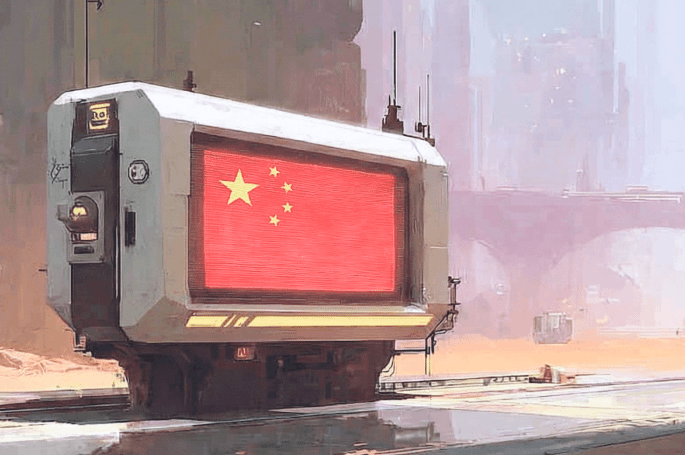
The Chinese AI Surge That’s Redefining Global Competition
China’s AI sector has quickly evolved into one of the most influential forces in global innovation. With more than 5,300 companies operating across a wide range of industries, China is helping redefine what large-scale AI deployment looks like. These rising innovators are accelerating AI commercialization, compressing innovation cycles, and raising the competitive bar for businesses worldwide.
Read now
The French AI Boom You Can’t Afford to Ignore in 2026
France has rapidly become one of Europe’s most influential AI growth markets, backed by major public investment and a surge in enterprise adoption. From generative AI and drug discovery to insurance automation and defense systems, French innovators are building globally competitive solutions across industries. Here’s a closer look at the companies helping position France at the center of the next wave of artificial intelligence.
Read nowEndless IT possibilities
Boost your productivity with Atera’s intuitive, centralized all-in-one platform