Generate summary with AI

Introduction: From hype to human collaboration
In 2025, adopting AI is a given the real challenge is finding the solution that drives real, rapid ROI. Too often, AI is framed as a “tool” for efficiency. The upside is far bigger when AI becomes a teammate that learns your environment, anticipates issues, and co-creates value.
Gartner’s latest CIO research places Data, Analytics & AI among the top five CIO pain points for 2025 and urges leaders to integrate AI into strategy, not just operations. Gartner.
The hidden cost of “AI as a tool”
Keeping AI in a tactical box (report generation, email creation, KB development) locks teams into cost-cutting narratives and reactive work. Gartner notes that CIOs who limit AI to efficiency gains underperform those who embed AI into decision loops and operating models where it can drive resilience, growth, and measurable ROI. Gartner
McKinsey’s research similarly finds that organizations realizing impact are the ones redesigning workflows and establishing senior oversight for AI—treating it as a managed capability, not a collection of point tools. McKinsey & Company
A new model: AI as a teammate
1. Robin — the personal IT professional for every employee.
Atera’s Robin functions like a full-time team member that responds, analyzes, remediates, and optimizes endpoints and networks, autonomously.
Use case: A finance department employee is unable to open an invoice. Robin detects the issue, confirms whether the required software (Adobe Reader) is installed, verifies the user’s authorization to use it, automatically installs the software if needed, and then prompts the user to set it as the default application for opening similar files.
See it live: Robin Demo
https://www.atera.com/blog/autonomy-day-25-autopilot-demo/
The human impact: from firefighting to foresight
Treating AI as a teammate changes the day-to-day of IT. Firefighting gives way to proactive engineering. Teams move from repetitive toil to architecture, security posture, and innovation.
McKinsey finds that companies drive bottom-line impact from AI rework processes and retrain teams, aligning people + AI in the flow of work—rather than bolting on tools. That operating-model shift is the difference between experimentation and value at scale. McKinsey & Company
A leadership imperative for CIOs
Gartner’s 2025 CIO outlook is unambiguous: make AI a board-level, cross-functional capability. CIOs should embed AI into planning cadences, governance, and performance management to move beyond pilots and achieve durable outcomes. Gartner
McKinsey echoes the playbook: organizations that put senior leaders in charge of AI governance and redesign workflows around AI unlock materially greater impact—versus those that keep AI as isolated point solutions. McKinsey & Company
What great looks like in 2025–26:
- AI participates in daily decision loops, not just back-office automations.
- Productive balance of autonomous remediation (Autopilot) and decision support (Copilot).
- Continuous enablement so IT pros level up into analytics, automation, and platform engineering.
Conclusion: Build the Human + AI IT Team
The winners won’t be the orgs that merely use AI, but those that work with AI. Treat it as your next teammate—one that scales expertise, accelerates strategy, and strengthens resilience.
Explore how Atera customers are putting this into practice with Robin and AI Copilot by starting your free trial.
Related Articles

The AI Startups Turning South Korea Into a Global Innovation Powerhouse
South Korea is rapidly emerging as one of the world’s most dynamic AI innovation hubs, fueled by strong government investment, advanced semiconductor manufacturing, and a growing startup ecosystem. From healthcare diagnostics and service robotics to generative AI and next-generation chips, a new wave of companies is shaping how artificial intelligence is applied across industries. This article highlights six South Korean AI companies gaining worldwide attention and the factors driving the country’s expanding role in the global AI economy.
Read now
The Japanese AI Companies That Could Change Global Tech
Japan is rapidly emerging as a major hub for artificial intelligence innovation, with startups applying AI across manufacturing, healthcare, logistics, and enterprise automation. Companies like Preferred Networks, ABEJA, and ExaWizards are using machine learning and data intelligence to solve real-world business challenges. As labor shortages, robotics expertise, and government investment accelerate adoption, Japan’s AI sector offers valuable insights into the future of global technology. Here are eight Japanese AI companies gaining attention, along with some reasons business leaders should be watching them.
Read now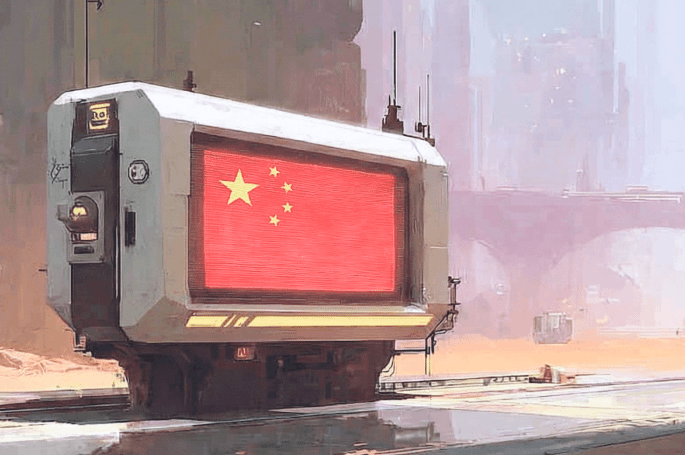
The Chinese AI Surge That’s Redefining Global Competition
China’s AI sector has quickly evolved into one of the most influential forces in global innovation. With more than 5,300 companies operating across a wide range of industries, China is helping redefine what large-scale AI deployment looks like. These rising innovators are accelerating AI commercialization, compressing innovation cycles, and raising the competitive bar for businesses worldwide.
Read now
The French AI Boom You Can’t Afford to Ignore in 2026
France has rapidly become one of Europe’s most influential AI growth markets, backed by major public investment and a surge in enterprise adoption. From generative AI and drug discovery to insurance automation and defense systems, French innovators are building globally competitive solutions across industries. Here’s a closer look at the companies helping position France at the center of the next wave of artificial intelligence.
Read nowEndless IT possibilities
Boost your productivity with Atera’s intuitive, centralized all-in-one platform